
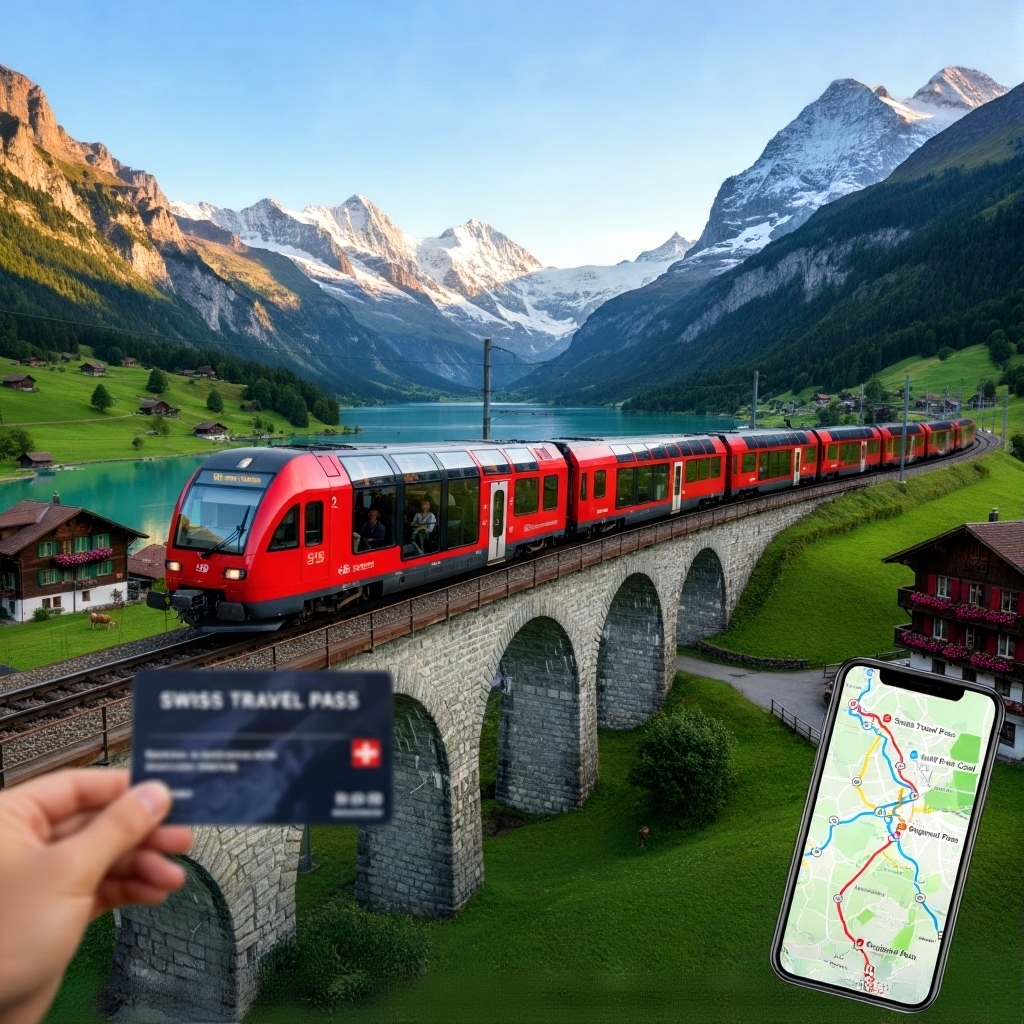
Introduction: Switzerland’s Rail System, A Masterpiece of Precision
There’s a reason Switzerland is known for precision. Its trains are not just transportation, they’re part of the country’s identity. Imagine gliding effortlessly through valleys dotted with chalets, along turquoise lakes, and into alpine peaks that look hand-painted.
But the beauty of Swiss rail comes with complexity. With multiple passes, national, regional, and mountain-specific, travellers often find themselves wondering: Which Swiss train pass is right for me?
As a certified Switzerland travel specialist, I help clients design seamless journeys that balance experience, cost, and comfort. This guide will demystify Switzerland’s rail pass system so you can travel smarter and in style.
The Swiss Travel Pass (STP) – The All-Inclusive Experience
The Swiss Travel Pass is the flagship of Swiss public transport and often the most convenient option for travellers who want complete freedom.
It grants unlimited travel on the national network of trains, buses, and boats for 3, 4, 8, or 15 days. You can now select travel days (flex pass) instead of only consecutive days, offering greater flexibility for multi-stop itineraries.
Key Inclusions:
- Unlimited use of SBB trains, boats, trams, and buses nationwide.
- Free entry to over 500 museums.
- Access to premium scenic trains such as the Glacier Express, Bernina Express, and Golden Pass Railway. The fare for these panoramic trains is fully covered by the STP, and you only need to pay a separate seat reservation fee.
- 50% discounts on many mountain transport routes including Rigi, Pilatus, and Schilthorn.
- Free travel within major cities such as Zurich, Geneva, Bern, and Lucerne.
Expert Insight:
The Swiss Travel Pass offers unbeatable convenience for multi-region itineraries. You can simply board any train without worrying about buying tickets each time. For first-time visitors or those who value simplicity, this pass delivers peace of mind, complete flexibility, and stress-free travel.
The Swiss Half Fare Card – The Smart Traveller’s Secret Weapon
While the Swiss Travel Pass gets most of the attention, the Swiss Half Fare Card is often the best-value choice for independent travellers.
This card allows you to purchase all train, bus, and boat tickets at half price, and it’s valid for one full month across the entire SBB network.
Why It Works So Well
For travellers who aren’t taking the panoramic scenic trains, the Half Fare Card provides nearly the same privileges as the Swiss Travel Pass at a fraction of the cost.
- You pay 50% off standard fares for most routes.
- For mountain railways and cable cars, you’re entitled to the same discounted rates as Swiss Travel Pass holders, usually 25% to 50% off.
- You maintain full flexibility to buy tickets only for the segments you actually use.
When It’s the Better Choice
- You plan to stay 7–20 days but travel at a slower pace (two to three bases instead of cross-country).
- You prefer free choice of travel days rather than consecutive-day usage.
- You’re visiting Switzerland as part of a multi-country itinerary.
Expert Example:
For clients basing themselves in Lucerne and Interlaken for a week without taking panoramic trains like the Glacier Express, the Half Fare Card often results in savings of 20–30 percent compared to a Swiss Travel Pass.
Combination Strategy:
Many luxury travellers pair the Half Fare Card with a regional pass, such as the Berner Oberland or Jungfrau Pass, for optimal coverage. This hybrid approach maximises flexibility and cost efficiency.
Regional Passes – Perfect for Slower, Immersive Journeys
Berner Oberland Pass
Best for travellers focusing on the Bernese Oberland Region including:
Interlaken
Grindelwald
Lauterbrunnen
Wengen
Mürren
Männlichen
Kleine Scheidegg
Lake Thun & Lake Brienz cruises
Kandersteg
Gstaad
Meiringen
Brienz
Schynige Platte
Ballenberg Museum
Many postal buses and regional trains
Coverage Highlights: – Unlimited rides on trains, boats, buses, and mountain lifts. – Free travel on Lake Thun and Lake Brienz cruises. – Access to scenic routes like Harder Kulm, Schynige Platte, and First.
Expert Note: Ideal for travellers spending three to six nights in the Jungfrau area during summer (May to October).
Jungfrau Travel Pass
Best for clients exploring the Jungfrau region extensively. Narrow and focus coverage compared to Berner Oberland Pass
Inclusions: – Unlimited travel between Interlaken, Lauterbrunnen, Grindelwald, Wengen, Mürren, Kleine Scheidegg, and Harder Kulm. – Discounts on the famous Jungfraujoch – Top of Europe railway.
Expert Tip: The Jungfrau Travel Pass works best for travellers planning multiple alpine excursions over several days.
Tell-Pass (Lucerne Region)
Includes unlimited travel on the Lucerne transport network, boats on Lake Lucerne, and cable cars to Mount Pilatus, Rigi, and Titlis.
Lake Geneva Region Pass
Perfect for travellers staying around Lausanne, Montreux, and Vevey. It includes access to Rochers-de-Naye, Lavaux vineyard trains, and lake cruises.
How to Choose the Right Pass – A Travel Designer’s Framework
As a travel specialist, I always guide clients through three decision filters.
1. Duration of Stay
- Three to five days: Consider the Swiss Travel Pass (three-day) or a regional pass.
- Six to ten days: Combine Swiss Travel Pass with a regional pass, or use a Half Fare Card.
- Ten days or more: Half Fare Card is ideal for long stays or slower exploration.
2. Geographical Focus
- Multi-region journey: Swiss Travel Pass.
- One or two regions (Lucerne–Interlaken): Half Fare Card or regional pass.
- Mountain-centric trips: Berner Oberland or Jungfrau Travel Pass.
3. Travel Personality
- Convenience seekers: Swiss Travel Pass.
- Budget-conscious or independent travellers: Half Fare Card.
- Luxury travellers or slow explorers: Combination of First Class STP and Regional Pass.
First Class vs Second Class – What You Need to Know
Choosing the right pass is one part of the puzzle; deciding how you travel is another.
First Class – The Swiss Way to Travel in Style
First Class offers the kind of serenity and space that perfectly aligns with Switzerland’s refined travel culture.
Why Clients Love It:
- Spacious comfort with fewer seats per carriage, more legroom, and larger windows.
- Quiet ambience that allows peaceful travel for honeymooners, executives, or luxury travellers.
- Ample luggage space for large suitcases.
- Non-reserved seats, so you can select your preferred window or forward-facing seat.
Expert Note: First Class applies mainly to Swiss Travel Passes (STP) and standard SBB tickets. Regional and mountain passes such as Jungfrau or Berner Oberland do not offer First Class because mountain railways have uniform seating.
Second Class – Efficient but Busy
Second Class offers the same routes but less comfort. During summer, especially around Interlaken, trains can become crowded with tour groups and families rushing to secure seats. Since Swiss trains do not have reserved seating like Japan’s Shinkansen, travellers must board quickly to find a good seat.
For travellers with large luggage, limited mobility, or a preference for calm, Second Class can feel cramped and stressful.
Who Should Go First Class
- Luxury clients who value serenity and space.
- Families with large suitcases or strollers.
- Travellers who enjoy quiet scenic rides without crowding.
- Professionals who wish to work or rest en route.
Expert Verdict: First Class does not make the train faster, but it transforms the journey. For clients who appreciate refined experiences, First Class travel embodies Switzerland’s ethos of efficiency, elegance, and ease.
Common Mistakes to Avoid
- Overlapping passes that cover the same area.
- Ignoring reservation rules on panoramic trains.
- Forgetting pass validity, as consecutive days mean you can’t skip usage.
- Overlooking Half Fare benefits, which often deliver the same discounts on mountain lifts at a lower cost.
Final Thoughts: Travel Design Is About Flow, Not Just Fares
The right Swiss rail pass is more than a ticket, it’s the backbone of a perfectly orchestrated journey. For some, convenience and simplicity win. For others, flexibility and savings matter more.
As a certified Switzerland travel specialist, my role is to interpret these nuances, blending rail passes, scenic routes, and luxury details into one seamless itinerary.
We also offer a one-hour Travel Consultation for Switzerland Rail Pass Selection, designed to help you identify the best option for your journey. During this private session, we will review the three filters above: duration, geography, and travel personality and determine the perfect pass for your needs. The consultation costs SGD 150, and you will receive a personalised PDF summary to take away for easy reference.
Contact Epic Travel Designer to craft your perfect Swiss journey, from the right pass to the most spectacular mountain rides.