
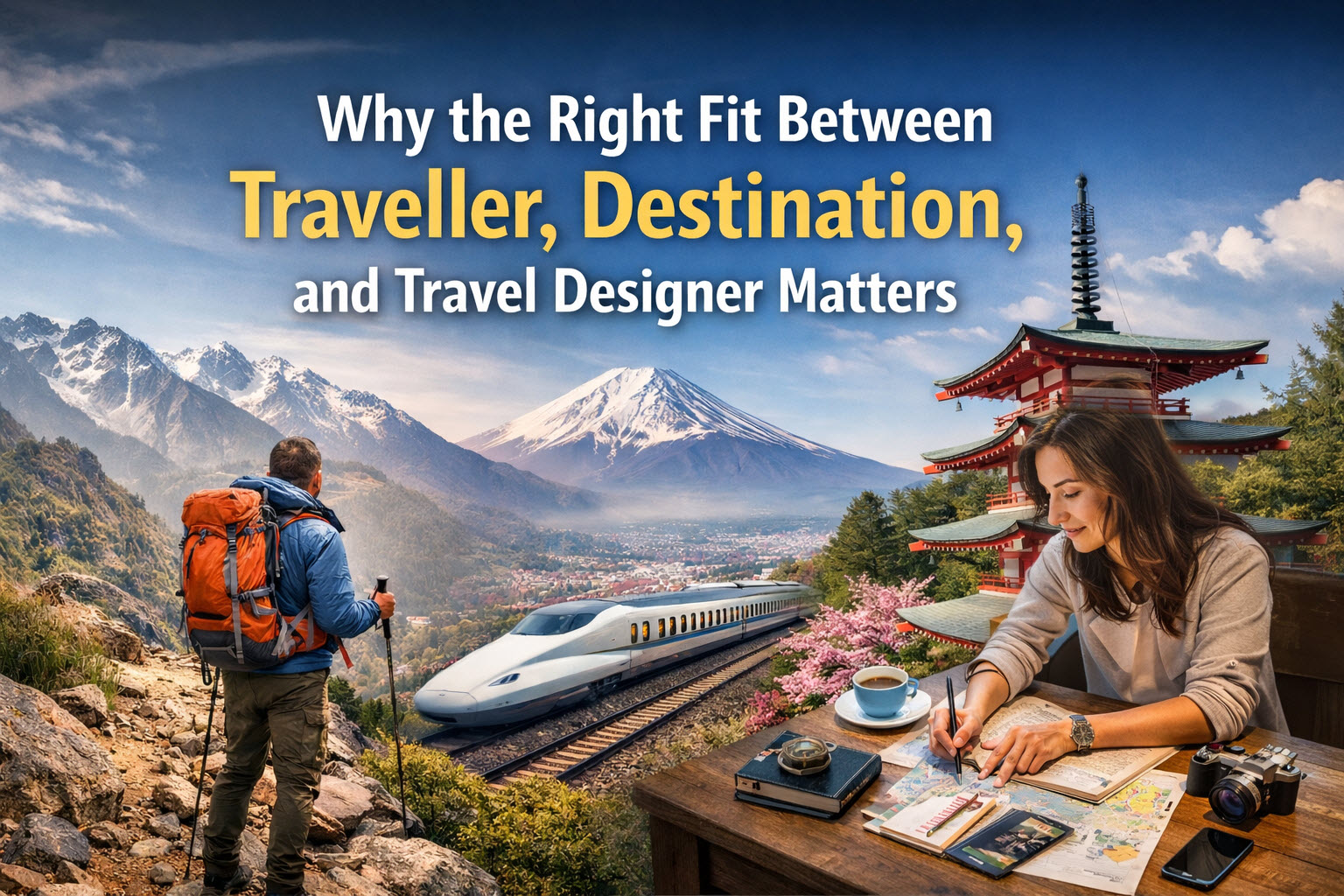
Travel Is Not About Where You Go, But Who You Are
I have seen this more times than I care to count.
The destination was beautiful.
The itinerary was thoughtfully designed.
The logistics worked perfectly.
And yet, the trip failed.
Not because of bad weather.
Not because of flights or hotels.
But because the traveller, the destination, and the way the trip was designed were never aligned to begin with.
Travel is not a neutral activity. It is an exchange of energy. When a traveller and a destination align, the journey flows naturally and becomes deeply rewarding. When they do not, even the most beautiful place can feel uncomfortable, frustrating, and wrong.
This is where most travel disappointments begin.
Loving the Idea of a Destination Versus Living the Reality
Many travellers fall in love with the idea of a destination.
They like how it sounds.
They like how it looks on social media.
They like what it represents socially.
But travel does not reward intention. It rewards alignment.
A destination does not change itself to meet your expectations. You meet it as it is.
Nepal and the Reality of Adventure Travel
I once worked with clients who confidently told me they loved walking and hiking. Based on that, they chose Nepal.
On paper, it made perfect sense. Nepal offers dramatic landscapes, spiritual depth, and some of the most iconic trekking routes in the world.
In reality, they turned back after thirty minutes.
The reason was leeches.
Nepal did not fail them. The destination delivered exactly what it promised. The problem was that they liked the idea of adventure more than the lived experience of it.
Adventure destinations do not soften themselves. They demand tolerance, resilience, and acceptance of discomfort. Without that mindset, even the most breathtaking scenery becomes unbearable.
Patagonia and Conditional Endurance
Another traveller confidently claimed they could walk twelve to fifteen kilometres a day and selected Patagonia for hiking.
Then the conditions surfaced.
The route must be flat.
There should be no elevation.
No rocks.
No pebbles.
That is not hiking. That is a controlled stroll.
Patagonia is rugged, uneven, and unapologetically wild. It rewards travellers who surrender control and embrace unpredictability. When expectations are overly curated, frustration is inevitable.
Once again, the destination was not the problem.
Japan, Cultural Travel, and Choosing a Destination Because Everyone Else Did
A client once approached me wanting a bespoke Japan vacation. Their reason was simple, and very common: everyone around them had been to Japan.
They described themselves as cultural travellers who wanted to immerse in Japanese lifestyles.
In travel design terms, cultural immersion in Japan usually means visiting shrines, temples, and castles, walking through Edo-period old towns, participating in a tea ceremony, possibly wearing a kimono, and visiting local markets to observe daily life.
That was exactly what I designed.
They also chose a hybrid travel style. Some escorted touring, combined with independent days using trains, specifically to experience the Shinkansen.
Then reality set in.
Old towns became boring.
Temples felt too religious.
The tea ceremony was considered too long and too quiet.
Wearing a kimono, which requires close to an hour of dressing and preparation, felt exhausting.
Markets were dismissed as boring.
Most telling of all, they panicked when they had to navigate major train stations on their own. The very train experience they had requested became overwhelming the moment independence was required.
Japan did not fail them.
The travel design did not fail them.
They chose Japan because it was popular, not because it fit them.
When Travellers Tell You Who They Think They Are
This is one of the hardest truths in travel design.
Most travellers are not intentionally dishonest. They describe who they think they are, or who they aspire to be.
The cultural traveller.
The adventurous traveller.
The independent traveller.
When a travel designer takes those words literally and plans accordingly, the trip collapses.
The failure is not poor planning.
It is inaccurate self-awareness.
There Is No Wrong Travel Style
There is nothing wrong with being a shopaholic instead of a museum lover.
There is nothing wrong with preferring comfort over challenge.
There is nothing wrong with wanting guided ease instead of independence.
The problem only arises when travellers are not truthful about what they actually enjoy.
When honesty exists, any destination can be designed to work.
When Destinations Market Themselves to the Wrong Audience
Misalignment does not only come from travellers. Sometimes, it starts with destination marketing.
Destinations, like people, have identities. They have rhythms, values, and ways of operating that cannot be changed without consequences.
Japan is a country built on structure, patience, respect, and social order. In recent years, it marketed itself as easy, affordable, and accessible to everyone.
This attracted visitors who came because Japan was trendy, not because they understood what Japan truly is.
Japan’s transport systems are complex by design. Its cultural experiences require stillness and attentiveness. Its service culture assumes awareness and courtesy.
Japan did not change who it is.
But the marketing suggested that it had.
That gap between expectation and reality is where frustration grows, on both sides.
A Personal Lesson I Learned the Hard Way in Italy
This is personal.
I have never enjoyed Italy, even during my student tour days. It always felt rough, confrontational, and intense. I do not thrive in loud environments, and I do not enjoy pizza or pasta.
Two years ago, I decided to go again. I thought perhaps my perspective had changed.
It became one of the most unpleasant vacations of my travel career.
Italy is expressive, chaotic, emotional, and unapologetic. It rewards travellers who thrive on stimulation, confrontation, and constant engagement.
I am not one of them.
There was nothing wrong with Italy.
I ignored who I am.
Why Alignment Matters More Than People Admit
Travel works when there is honesty.
Do you enjoy structure or flexibility?
Do crowds energise you or drain you?
Do you want immersion or convenience?
Are you choosing this destination because it fits you, or because it is popular?
When there is misalignment, stress replaces joy. Small inconveniences feel overwhelming. Complaints appear where curiosity should exist.
When alignment is present, travel feels natural.
The Uncomfortable Truth About Travel Design
This is also why not every client is suited for bespoke travel design.
Some travellers want validation instead of truth.
Some want a fantasy version of themselves planned.
Some expect destinations to bend instead of adapting themselves.
A good travel designer plans well.
A great one filters honestly.
Alignment must exist between traveller, destination, and designer.
Final Thoughts
Travel is not a checklist. It is a relationship.
The most meaningful journeys happen when travellers are honest about who they are, destinations remain authentic, and travel designers translate that truth into reality.
At Epic Travel Designer, we do not judge travel styles. Whether you are a nature lover, a shopper, a culture seeker, or someone who simply wants ease, we can design a trip that works for you.
But it only works when you are truthful.
Because when alignment exists, travel becomes unforgettable.
And when it does not, even the most beautiful place will feel wrong.