
Sometimes, the most valuable travel lessons come from taking the harder route. And occasionally, the solution to an unexpected problem is as simple as buying a cup of coffee.
A Small Problem I Hadn’t Quite Solved
I was travelling by public bus from Kotor, Montenegro, to Mostar (Herzegovina), Bosnia and Herzegovina.
It was going to be a long journey, involving a border crossing and several hours on the road.
There was just one small problem.
I didn’t have any Bosnian convertible marks (KM), the local currency.
I knew I would need a taxi from Mostar bus station to my hotel. Based on my research, the journey should cost approximately 5 to 6 KM, equivalent to €2.50 to €3.
My fallback plan was simple. I would pay the taxi driver in euros.
However, I also knew that paying in a foreign currency could mean receiving an unfavourable exchange rate, or no change at all.
So, before leaving Montenegro, I deliberately set aside enough euro coins for the taxi fare.
Problem temporarily solved.
Or so I thought.
The Unexpected €1 Toilet Break
Our bus journey seemed to take forever.
The border crossing alone took approximately an hour. We had to stand outside in strong, freezing winds while waiting for border formalities to be completed.
It wasn’t particularly pleasant.
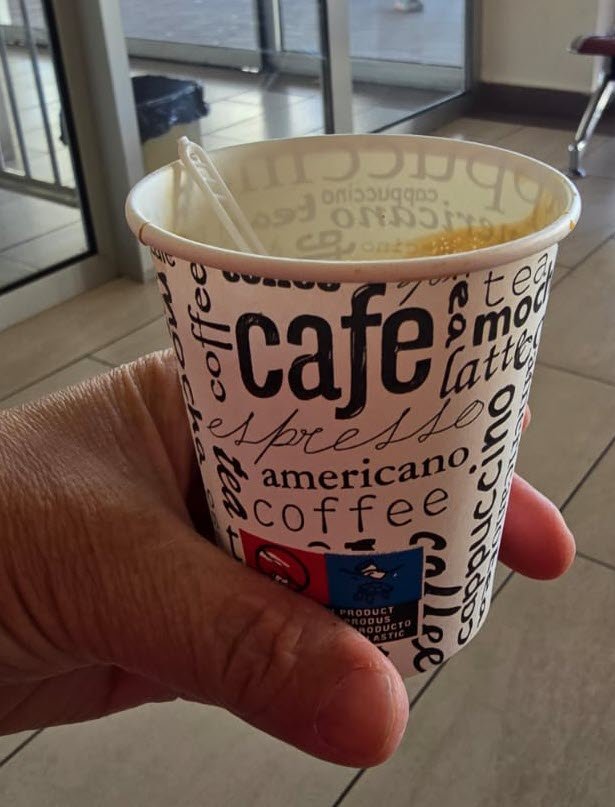
Eventually, we stopped at a highway rest station for a toilet and coffee break.
Except the toilets cost €1 per person.
There went my carefully reserved euro coins!
I was back to square one.
I still had euro banknotes, but no Bosnian marks and insufficient small change for the taxi.
Then my travel companion decided she wanted a coffee.
She wondered whether the café would accept euros.
And suddenly, an idea came to me.
The €1.50 Coffee That Saved the Day
We approached the counter and asked how much a coffee cost.
“Three marks.”
That was equivalent to approximately €1.50.
With the help of another customer, we asked whether the café accepted euros.
The answer was yes.
Excellent!
I handed the lady a €10 note and said, “Mark, mark!”
She understood immediately.
Instead of returning my change in euros, she handed me 16.50 KM.
I quickly checked the exchange rate on Google.
€10 was worth approximately 19.50 KM that day.
Deduct the 3 KM coffee, and the correct change was exactly 16.50 KM.
She had effectively given me the prevailing exchange rate!
I was delighted.
Not because I had saved a few cents on currency conversion.
But because a simple coffee purchase had unexpectedly solved my local currency problem.
The café had effectively become my impromptu currency exchange counter.
I now had enough KM to pay for my taxi, without searching for a money changer or relying on a driver accepting euros.
Of course, this wasn’t a conventional currency exchange service. It was simply a legitimate purchase where the seller agreed to accept euros and return the change in local currency.
And it worked beautifully.
The Final Test in Mostar
When we eventually arrived at Mostar bus station, I carefully kept my newly acquired convertible marks within reach.
We flagged down a taxi.
Me: “How much to XXX Hotel?”
Driver: “Meter”
Perfect.
The journey to our hotel cost approximately 7 KM, slightly more than I had originally estimated.
No problem.
I happily paid in the local currency, with enough change to spare.
A small logistical problem, solved over a cup of coffee somewhere along a highway in Bosnia.
But there was a bigger lesson behind this seemingly trivial experience.
Why I Deliberately Choose the Harder Way to Travel
As a professional travel designer, I could easily have arranged a private transfer from Kotor to Mostar.
I have access to local travel partners who could have organised a comfortable, door-to-door journey.
But I deliberately chose to travel by public bus.
Not because I expect my clients to travel this way, but because travelling the hard way allows me to accumulate experiences that I cannot acquire sitting behind a desk.
These are the real hard knocks of travel. Every site inspection is a solid field trip experience.
Standing in freezing winds for an hour while clearing border formalities. Navigating unfamiliar transport systems. Arriving in another country without local currency. Finding practical solutions when things don’t go according to plan.
None of these experiences is particularly glamorous.
But each one teaches me something.
I learn how transport connections actually work, where potential difficulties lie and what travellers may encounter along the way.
More importantly, I get to exercise my judgement and problem-solving skills in real situations.
Had I taken a private transfer, I would have enjoyed a more comfortable journey.
But I might never have appreciated the realities of travelling across this border by public bus.
I wouldn’t have encountered the same currency challenge.
And I certainly wouldn’t have discovered how a €1.50 coffee could solve it!
Site Inspections Are More Than Sightseeing
I specialise in designing complex journeys involving multiple destinations, different modes of transport and travellers with varying needs.
For me, travel design is not simply sitting in a comfortable office and assembling an itinerary from a list of available suppliers.
I research routes, examine connections, evaluate alternatives and work out how the different parts of a journey fit together.
Whenever possible, I also experience these journeys firsthand.
My site inspections go beyond scouting attractions, evaluating hotels and discovering interesting local experiences.
I want to understand how a destination actually works.
How practical are the transport connections? What challenges might travellers encounter? How comfortable is the journey? What are the potential risks?
And just as importantly, what does a place actually feel like?
These are things that cannot always be understood through online research, supplier presentations or destination brochures.
Sometimes, the most valuable discoveries aren’t places worth visiting.
They’re experiences I know my clients should avoid.
My journey from Kotor to Mostar reinforced why I would recommend a private transfer for my clients.
Not simply for convenience, but for their safety, certainty and comfort.
A private transfer would offer a more comfortable journey, with the logistics arranged in advance and greater support along the way.
My clients wouldn’t have to worry about finding a taxi upon arrival or obtaining local currency immediately. These practical details could be addressed beforehand.
They also wouldn’t have to navigate an unfamiliar public transport system or deal with the same uncertainties I experienced.
I don’t undertake these journeys because they’re necessarily the best way for my clients to travel. I undertake them because they help me understand what the best way might be.
The Value of Real-World Experience
After more than a decade designing customised journeys, I’ve learned that good travel planning requires more than destination knowledge.
It requires practical experience, sound judgement and the ability to respond when circumstances change.
Every journey I undertake adds another layer to that experience.
Sometimes, I discover an exceptional hotel or an interesting local experience worth recommending.
Other times, I discover logistical challenges that I would rather my clients never encounter.
And occasionally, I find myself solving a problem that no amount of advance research could have anticipated.
These experiences sharpen my problem-solving skills, deepen my understanding of destinations and help me make more informed recommendations.
They also remind me that even the most carefully planned journeys can encounter unexpected situations.
Not every eventuality can be predicted.
And not every solution can be prepared in advance.
But experience helps me recognise possibilities, evaluate alternatives and make sensible decisions when circumstances change.
My clients entrust me with their holidays because they expect me to have the knowledge, experience and judgement to design journeys around their individual needs.
They shouldn’t have to discover logistical problems the hard way.
That’s part of my responsibility as their travel designer.
My clients don’t need to travel the hard way. They benefit from the experience I’ve gained by doing so.
And sometimes, all it takes is a €1.50 coffee to remind me why that matters.
About the Author
Best Teo is a Singapore-based boutique travel designer with over a decade of experience specialising in bespoke, complex journeys involving multiple destinations, diverse transport modes and unique traveller needs.
Through extensive firsthand travel and site inspections, she goes beyond conventional itinerary planning to understand real-world logistics, anticipate challenges and design journeys with sound judgement, comfort and peace of mind.
At Epic Travel Designer, every journey is thoughtfully crafted around the people travelling, not simply the places they visit.
“I don’t sell itineraries. I design journeys.”