
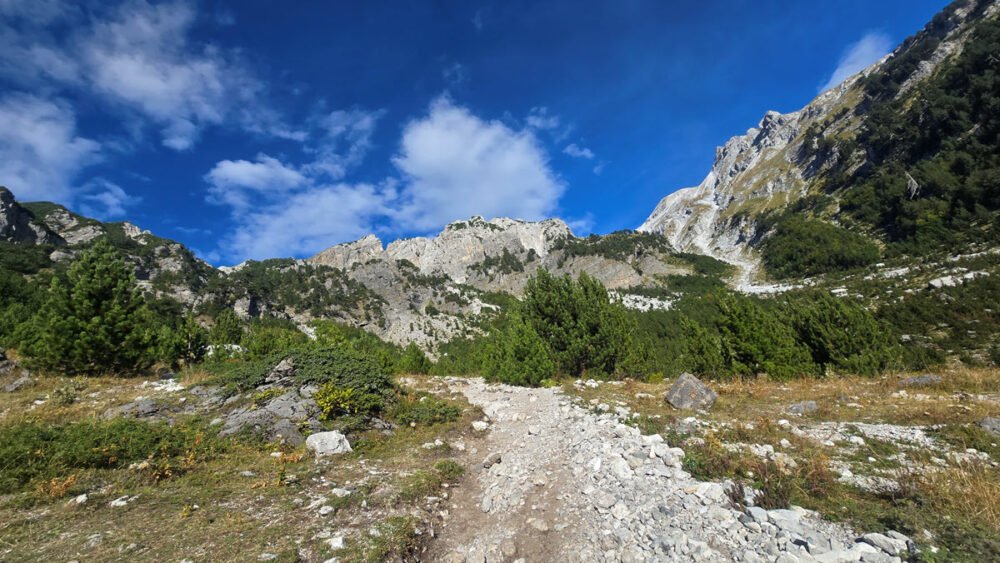
My Luggage Arrived Two Days in Theth Before I Did
Sometimes the travel solution you need doesn’t exist. That doesn’t necessarily mean there isn’t a solution.
My luggage arrived in Theth two days before I did.
It travelled there comfortably by road in about two hours.
I, on the other hand, took 7.5 hours to walk across the mountains to reach the same place.
And I arrived two days later.
That wasn’t because my luggage had access to some sophisticated forwarding service. There was no such service for what I needed.
I created one.
Five nights, one day pack and a mountain.
I was travelling from Shkodër to Valbona, before hiking across the Valbona Pass to Theth in northern Albania.
On a map, Valbona and Theth don’t look particularly far apart. Getting between them, however, is another matter.
There is no road connecting the two villages directly through the mountains.
To reach Valbona from Shkodër, my journey would take about six hours: roughly two hours by road to Lake Koman, a two-hour ferry journey along the lake to Fierze, followed by another two hours by road into Valbona.
From Valbona, I would eventually reach Theth the old-fashioned way: on foot, across the mountains.
I had deliberately planned two nights in Valbona so that we could rest before attempting the hike, followed by three nights in Theth.
Five nights in total.
There was no way I wanted to survive five nights with only what I could fit into my day pack. But neither did I want to carry a cabin bag across Valbona Pass. That would be insane.
So the luggage had to get to Theth somehow.
The obvious solution didn’t make sense to me
I contacted my hotel in Valbona and asked about luggage transfer.
Yes, it could be done.
By mule.
But transporting our two small cabin bags would cost more than a night’s stay in a four-star hotel in Valbona.
My travel partner’s solution was straightforward: just pay for it.
I wasn’t convinced.
It wasn’t simply about paying less. I didn’t think the solution represented good value. And if there was a practical alternative, I wasn’t particularly keen on making an animal carry my luggage across the mountains either.
More importantly, I had already studied the transport routes.
I knew that while there was no road between Valbona and Theth, there was a road from Shkodër to Theth.
Minivans travelled that route in about two hours.
And that led to a very simple question:
If the cars can go there, why can’t the bags?
The service didn’t exist. The route did.
My luggage didn’t actually need to follow me to Valbona.
It could leave Shkodër without me and travel directly to Theth by road.
Problem solved.
Or so I thought.
I started contacting companies operating the Shkodër to Theth route.
Could they take two cabin bags to Theth without their owners?
No.
They transported passengers and their luggage. They didn’t transport luggage on its own.
I tried several operators and received essentially the same answer.
But I was confident the idea itself was sound.
I wasn’t asking anyone to create a new transport route. The vehicles were already travelling from Shkodër to Theth every day at fixed schedule.
I just needed to find someone willing to let my bags travel without me.
Eventually, I found a family-run transport company in Theth with an established track record and good reviews.
Their main business was transporting passengers between Shkodër and Theth.
So I asked the same question.
Could my two cabin bags travel to Theth without us?
This time, the answer was:
Yes.
And it was genuinely door to door.
My hotel in Shkodër was on a pedestrian street, so the vehicle couldn’t even reach the entrance. Someone would come to the hotel, collect the bags and roll them out to where the vehicle was parked.
At the other end, after dropping off their passengers in Theth, they would take my luggage another few minutes down the road and deliver it directly to my guesthouse.
I didn’t have to bring the bags to a depot. My guesthouse didn’t have to collect them from the minivan stop.
Hotel in Shkodër to guesthouse in Theth.
They even charged less to transport a bag than they would have charged to transport a passenger.
Now that made sense.
Finding the solution was only half the job
I still wasn’t going to hand two bags containing our belongings to someone I had never met and simply hope for the best.
Over the next few days, I communicated repeatedly with the operator.
Interestingly, communicating in English could sometimes take quite a while. Once I started translating my messages into Albanian, replies came almost immediately.
Thank you, Google Translate. 😊😊
I probably messaged the poor man 20 times.🤣🤣
Yet his replies remained prompt even on Sunday, polite and consistent. He never appeared annoyed by my questions.
That mattered.
I was effectively testing the supplier as we communicated.
How responsive was he?
Were his answers consistent?
Did what he told me make sense?
Did I feel comfortable trusting him with our belongings?
Over two or three days, that trust gradually developed.
But I still wanted safeguards.
Building my own luggage-forwarding system
First, I contacted our guesthouse in Theth.
I explained that we wouldn’t arrive for another two days, but our luggage would.
Could they receive and store it for us?
Another yes.
Now I had both ends of the system.
Next came the luggage itself.
I went to the supermarket for a marker and tape so that I could label each bag clearly with our details and its destination.
I used to travel with a roll of masking tape until airport security once confiscated it as a dangerous item.
Perhaps they thought I was planning to abduct the pilot with my flimsy roll of tape. 🤔🤔
So supermarket tape it was.
I labelled the bags, locked them and put a Samsung SmartTag inside each one.
Then I arranged two separate confirmations.
The transporter would WhatsApp me when the luggage was delivered.
The guesthouse would independently WhatsApp me when they received it.
Collection. Tracking. Delivery. Independent confirmation.
I had effectively created my own miniature Yamato (Japanese transport company) luggage-forwarding system.
There was even a contingency.
If the transporter failed to appear that morning, I could still take the bags with me to Valbona and fall back on the mule transfer.
Creative problem solving doesn’t mean assuming everything will work.
It means knowing what you will do if it doesn’t.
At 6am, my luggage left without me
The next morning, right on time, someone from the transport company appeared at our hotel in Shkodër.
Because the hotel was on a pedestrian street, she collected the bags from us and rolled them out towards the waiting vehicle.
Before she left, I asked her to pose for a photograph with my luggage. In the event of any mishap, I can produce the photo for identification. 🤞🤞
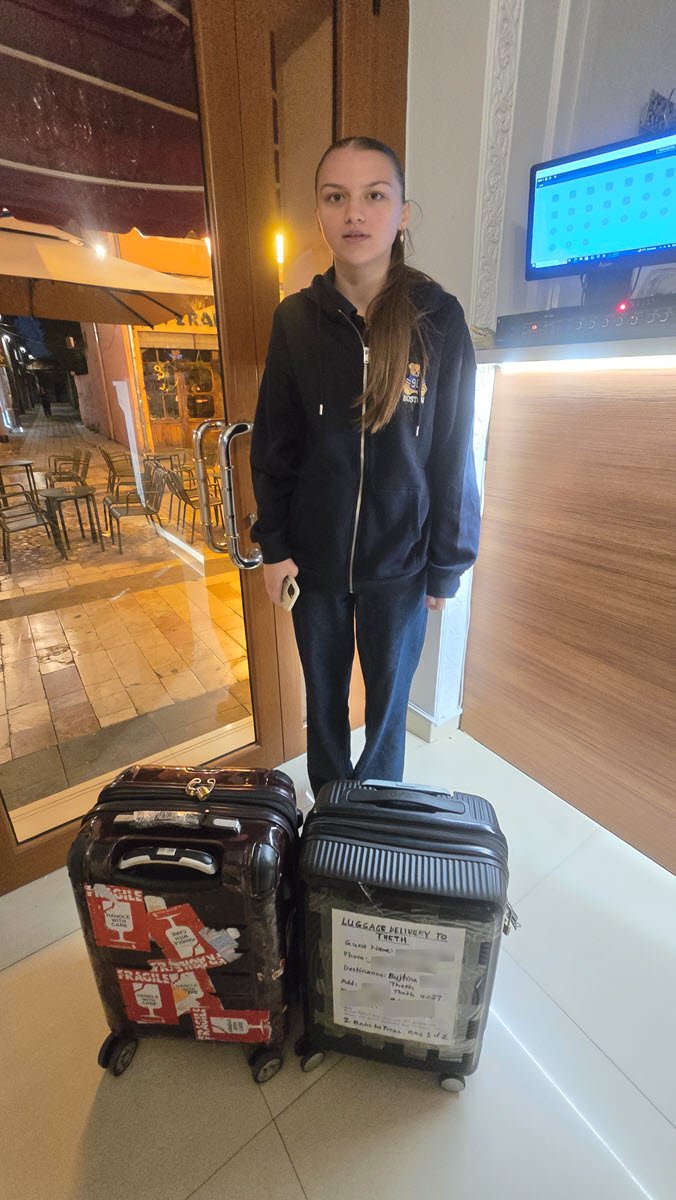
Then we went our separate ways.
My bags headed directly to Theth.
I headed towards Lake Koman and Valbona.
Later, while travelling towards Valbona, I opened SmartThings and checked the SmartTags.
There they were.
My bags were moving across the map towards Theth.
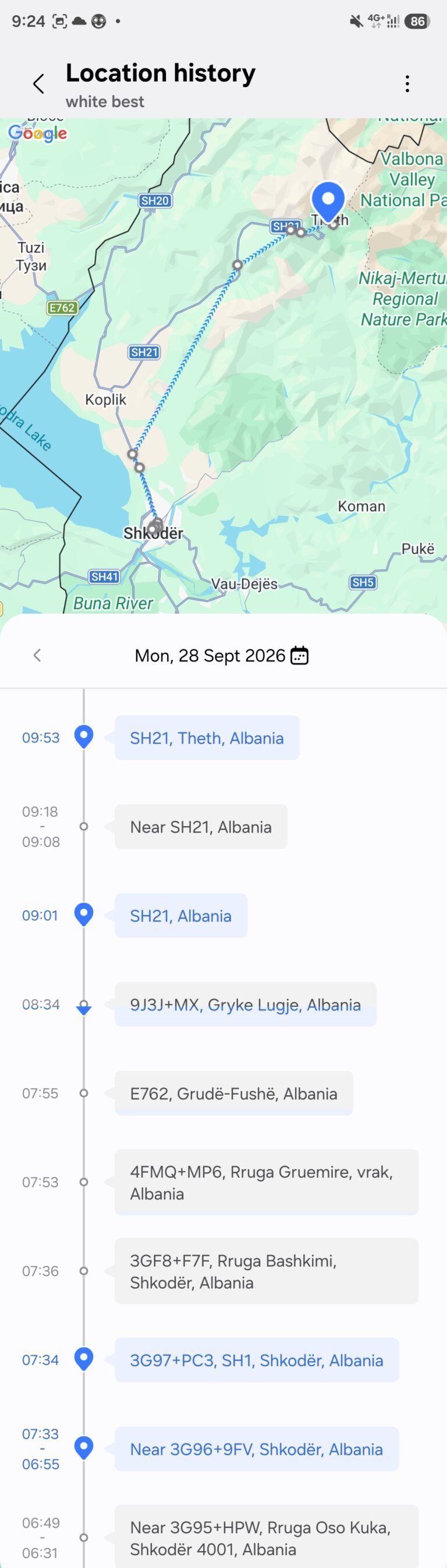
It felt rather like watching my Grab(Uber) driver approaching or tracking a Taobao(Amazon) parcel, except the parcel contained my clothes, instant noodles and precious little cooker.
Then the first WhatsApp message arrived.
The transporter sent me a photograph.
Delivered.
About five minutes later, another message arrived.
This one was from the guesthouse.
They had received the bags.
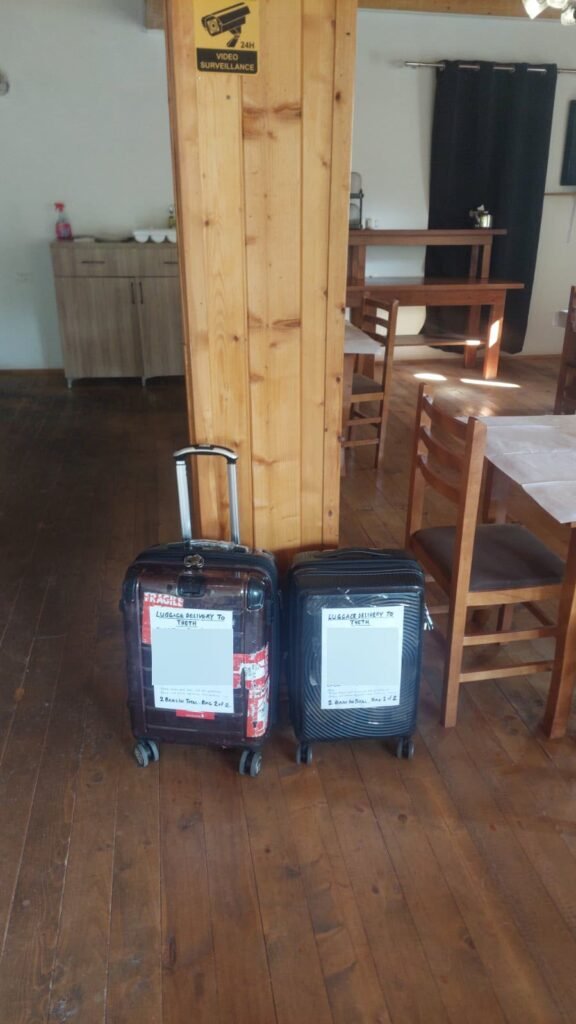
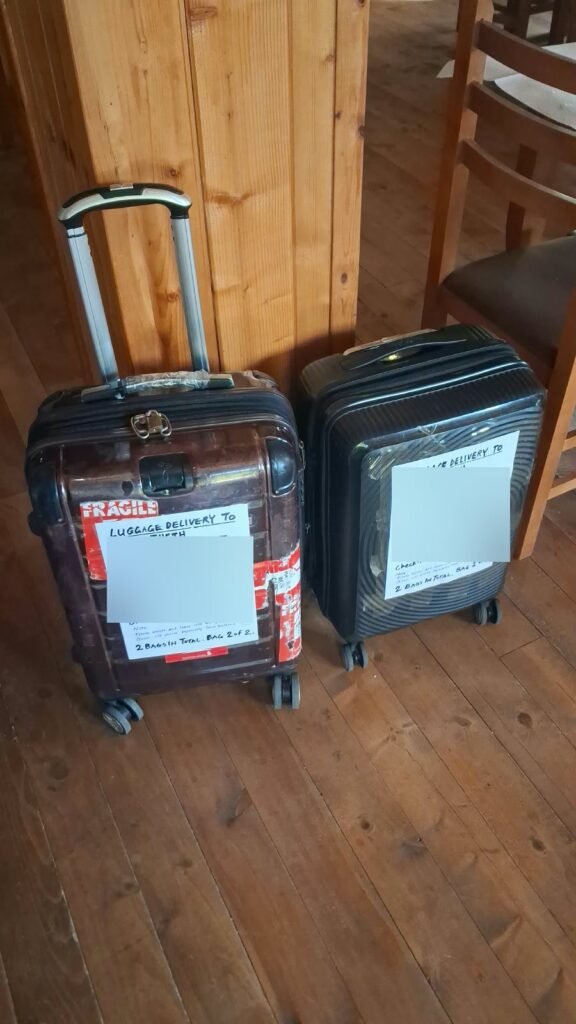
Two confirmations, five minutes apart: delivered by the transporter and received by the guesthouse.
Collection. Tracking. Delivery. Independent confirmation.
The Best Teo Homemade Luggage Forwarding System had worked.
My luggage had made the roughly two-hour journey to Theth.
I wouldn’t get there for another two days.
Two days later, I caught up with my luggage
Two days later, it was finally my turn.
My luggage had travelled from Shkodër to Theth by road in about two hours.
I took 7.5 hours to walk from Valbona across the mountains to Theth.
When I finally arrived, the bags I had waved goodbye to two days earlier were sitting there waiting for me.
More importantly, so were my cooker and instant noodles.
After days of Albanian food and 7.5 hours on the trail, I was craving something incredibly ordinary: noodles and rice.
That little cooker suddenly felt like luxury.
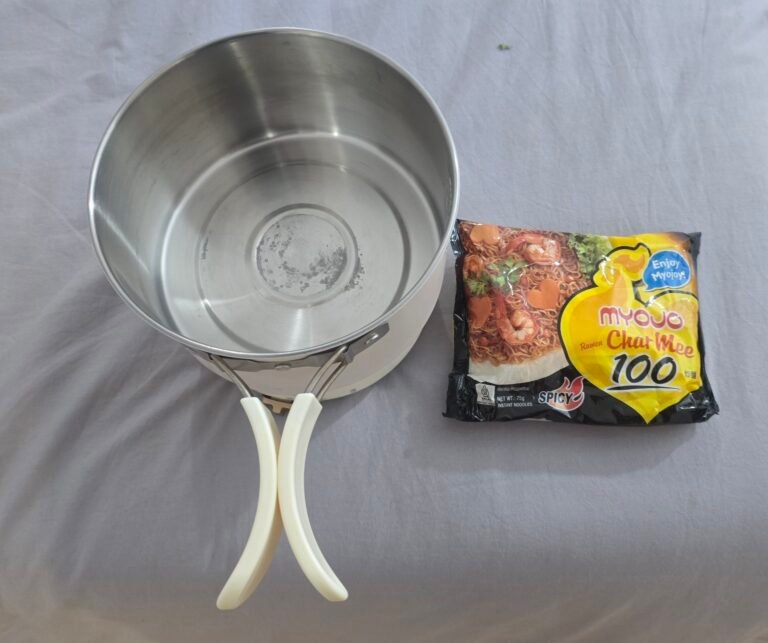
And as I sat in Theth with my comfort food, I thought about how the whole solution had started.
Not with a booking platform.
Not with an established luggage-forwarding service.
Just one question:
If the cars can go there, why can’t the bags?
Sometimes travel design is creative problem solving
I use the same thinking when designing journeys for myself and for my clients.
First, understand the routes and the constraints.
Then question the obvious solution.
Look at what already exists and ask whether it can be used differently.
Assess the people you are entrusting with the job. Put safeguards in place. Have a contingency if the first plan fails.
The luggage-transfer service I needed in Albania didn’t officially exist.
But all the pieces required to create it did.
Sometimes creative problem solving in travel isn’t about knowing the answer immediately.
It’s about understanding the system well enough to see another way through it.
About The Author
Best Teo is the Chief Travel Designer of Epic Travel Designer, a Singapore-based boutique travel company specialising in customised private tours that designs well-paced, seamless travel experiences across Asia and Europe, focusing on logistics, flow, and meaningful travel.