
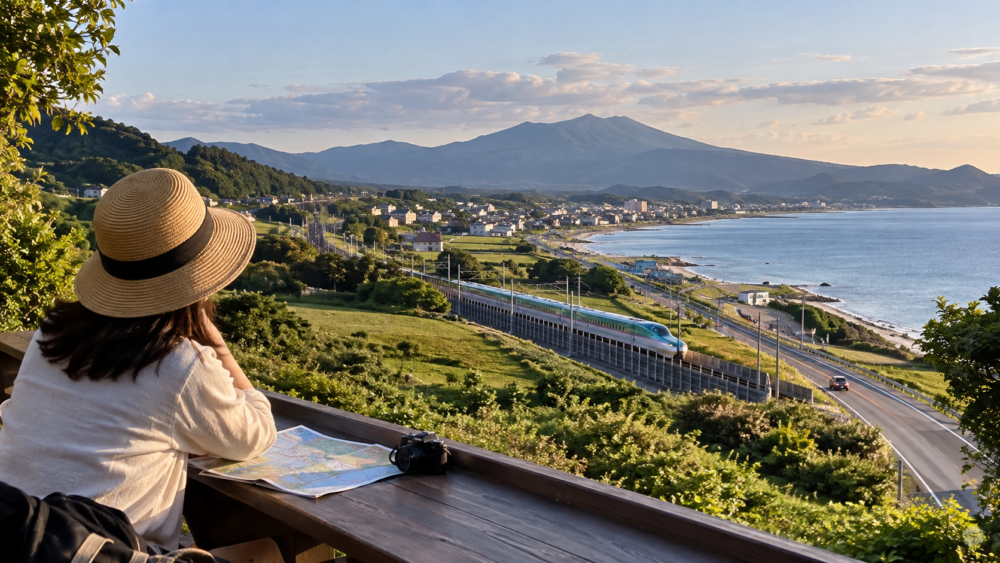
Most people think Travel Designers are for luxury holidays.
Perhaps a special honeymoon, a once-in-a-lifetime journey or a five-star holiday where money is secondary to experience.
Because of that, professional travel design is often assumed to be expensive, unnecessary or reserved for a particular type of traveller.
But travel design isn’t necessarily about making a holiday more luxurious.
It is about making a holiday work well.
Think about designing a home.
An interior designer makes hundreds of individual design decisions to create one home. The flooring, lighting, furniture, colours, materials, storage and use of space all have to work together.
You could choose an expensive sofa, beautiful tiles and the best lighting individually, yet still end up with a home that doesn’t quite work.
Travel is similar.
Finding the best hotel, the best transport and the best experiences individually does not guarantee the best quality holiday.
The individual components are interconnected. One decision affects another, and collectively, hundreds of small decisions determine the quality of the journey.
That is where travel design comes in.
A Holiday Is More Than a Collection of Bookings
It is easy to look at a holiday as a collection of individual bookings.
Flights. Hotels. Trains. Rental cars. Private transfers. Guides. Activities. Restaurants.
But the best individual choice isn’t necessarily the best choice for the overall journey.
A wonderful hotel in the wrong location can create unnecessary travelling every day.
A cheaper rental car can become expensive if it creates backtracking or attracts a substantial one-way fee.
A highly rated attraction can be completely wrong for the people actually taking the trip.
Each component affects something else.
Travel design is therefore not about collecting the best individual components. It is about choosing the right components and making them work together.
This becomes particularly important in three situations.
1. When a Journey Covers Multiple Countries, Cities or Regions
The first challenge is often not deciding what to see.
It is deciding how the journey should flow.
When a trip covers several cities, regions or countries, the order matters. A route that looks perfectly logical on a map may not work nearly as well once actual travel times, transport connections, accessibility and the beginning and end points of the journey are considered.
Changing the order of two destinations can remove unnecessary backtracking.
A destination originally planned as an overnight stop might work better as a day trip.
And adding another city may be technically possible, but take too much time away from everywhere else.
Good route design isn’t about squeezing every requested destination into the available number of days.
It is about connecting the places that matter in a way that preserves the quality of the journey.
I had a client who wanted to spend 10 days travelling through Hakodate in Hokkaido, followed by Aomori, Akita and Iwate in Tohoku.
Four cities in 10 days sounds possible.
But that works out to an average of only 2.5 days in each city, even before accounting for the time spent travelling between them.
The clients would barely have time to arrive, settle in and experience a place before packing up and moving on again.
Iwate was also less accessible within the overall route.
Instead, I recommended dropping Iwate and concentrating on Hakodate, Aomori and Akita.
They would visit one destination less, but have more time to decompress, settle into each place and actually enjoy the journey.
Sometimes good travel design is not about finding a way to fit everything in.
It is knowing when to leave something out.
2. When Different Ways of Travelling Make the Journey Better
Once the route is established, another layer of design begins.
How should the different destinations be connected?
There is no reason a holiday has to be entirely self-drive, entirely by rail or entirely private.
Different forms of transport serve different purposes.
Self-driving can provide freedom in rural areas where public transport is limited. Rail can be faster and easier between major cities. A private transfer can solve an awkward connection. A ferry or scenic railway may be deliberately chosen because the journey itself is part of the experience.
Good transport design therefore isn’t about choosing one mode of transport and using it throughout the trip.
It is about using the right form of transport at the right point in the journey.
The same Hokkaido and Tohoku trip is a good example.
The clients wanted to self-drive, and their return flight would eventually depart from Akita.
The seemingly straightforward solution was to rent one car in Hokkaido, drive through Tohoku and return it in Akita.
But returning the car so far from where it was collected would incur an expensive one-way return fee.
Instead, I divided the self-drive into two sections.
They would rent a car in Hokkaido and return it at Shin-Hakodate-Hokuto. From there, they would take the Hokkaido Shinkansen to Shin-Aomori, then collect a second rental car for the Tohoku portion of the journey and eventually return it in Akita.
Keeping each rental within its respective region made the car rental more economical and avoided the expensive long-distance one-way return fee.
More importantly, the clients did not have to sacrifice what they wanted from the trip. They still had the freedom of self-driving where it was useful, while the Shinkansen efficiently connected the two driving sections.
The solution wasn’t one rental car or one train.
It was car + Shinkansen + car, each used where it made the most sense.
This is why looking at individual bookings can be misleading.
The better solution often comes from how the different choices work together.
3. When the People Create the Complexity
Not every complicated journey involves multiple countries or different forms of transport.
Sometimes the route is straightforward.
The travellers are not.
A multi-generation family, a large group of friends or even several couples travelling together can have very different interests, energy levels and ideas of what makes a good holiday.
Trying to make everyone do everything together isn’t necessarily good travel design.
The itinerary has to consider the people taking the trip.
Pace matters.
Interests matter.
Physical ability matters.
And sometimes the best solution is to let people do different things for part of the day, then bring them back together for the experiences that matter.
I once designed a Taiwan journey for six girlfriends celebrating their 50th birthdays.
Three loved hiking.
The other three loved shopping and preferred a more relaxing holiday.
Instead of forcing one half of the group to compromise every day, the itinerary was designed to accommodate both.
While three went hiking, the other three could remain at the resort to enjoy the hot springs, wellness experiences and facilities.
Later, everyone met again for lunch and shared activities such as cycling.
They had time to pursue their own interests, but still came together for the experiences that created precious memories and celebrated their friendship.
Travelling together doesn’t mean everyone has to do everything together.
Sometimes good travel design is knowing when people should separate, and when they should come back together.
You Can Plan It Yourself, But What Does It Really Cost?
Of course, all of this can be done independently.
Many travellers enjoy researching their own holidays, and there is nothing wrong with that.
But the cost of DIY planning isn’t only monetary.
There is also time.
Researching routes, comparing hotels, checking transport connections, reading rental conditions and coordinating everyone’s preferences can consume many evenings before the holiday even begins.
And when several people are travelling together, there is another cost that is rarely discussed.
Someone becomes the organiser.
That person makes hundreds of small decisions before departure.
And the job doesn’t necessarily stop when the holiday begins.
The organiser is often still coordinating departure times, deciding where to eat, checking tomorrow’s arrangements, changing plans and answering everyone else’s questions.
If something doesn’t work, the organiser may also be the person everyone turns to.
Everyone else is on holiday.
The organiser may still be running it.
There is a mental and emotional cost to that responsibility, particularly when you feel responsible for whether everyone else enjoys the trip.
At some point, planning and coordinating can stop being part of the fun.
It becomes work.
So the comparison between DIY and hiring a Travel Designer isn’t simply about money.
If you decide that professional travel design is right for your journey, I have also written about what to look for when choosing a Travel Designer.
It is also about the value of your time, your mental energy and your ability to enjoy the holiday alongside everyone else.
The Difference Is in the Decisions
A Travel Designer doesn’t necessarily have access to a magical hotel, train or attraction that you cannot find online yourself.
The difference lies in how the decisions are made.
A good hotel is not automatically the right hotel.
A convenient train is not automatically the right connection.
A famous attraction does not automatically belong in the itinerary.
Every choice has to be considered in relation to everything around it and the people taking the journey.
Change the hotel and it may affect transport and the day’s activities.
Change the transport and it may change where an overnight stay makes sense.
Add another destination and the pace of the entire trip may change.
Change the needs of the travellers and several other decisions may have to change with them.
Most of these decisions are small.
The traveller may never even know how many were considered.
But collectively, they determine whether a holiday feels rushed or well paced, fragmented or coherent, stressful or effortless.
Because ultimately, travellers don’t experience their holiday as a collection of hotel reservations, train tickets, rental cars and attraction bookings.
They experience the holiday as a whole.
And a good quality holiday is created in much the same way as a well-designed home.
Not through one brilliant choice, or by simply buying the best of everything.
It comes from hundreds of individual decisions, carefully considered and designed to work together.
Most people think Travel Designers are for luxury holidays.
Perhaps a special honeymoon, a once-in-a-lifetime journey or a five-star holiday where money is secondary to experience.
Because of that, professional travel design is often assumed to be expensive, unnecessary or reserved for a particular type of traveller.
But travel design isn’t necessarily about making a holiday more luxurious.
It is about making a holiday work well.
Think about designing a home.
An interior designer makes hundreds of individual design decisions to create one home. The flooring, lighting, furniture, colours, materials, storage and use of space all have to work together.
You could choose an expensive sofa, beautiful tiles and the best lighting individually, yet still end up with a home that doesn’t quite work.
Travel is similar.
Finding the best hotel, the best transport and the best experiences individually does not guarantee the best quality holiday.
The individual components are interconnected. One decision affects another, and collectively, hundreds of small decisions determine the quality of the journey.
That is where travel design comes in.
A Holiday Is More Than a Collection of Bookings
It is easy to look at a holiday as a collection of individual bookings.
Flights. Hotels. Trains. Rental cars. Private transfers. Guides. Activities. Restaurants.
But the best individual choice isn’t necessarily the best choice for the overall journey.
A wonderful hotel in the wrong location can create unnecessary travelling every day.
A cheaper rental car can become expensive if it creates backtracking or attracts a substantial one-way fee.
A highly rated attraction can be completely wrong for the people actually taking the trip.
Each component affects something else.
Travel design is therefore not about collecting the best individual components. It is about choosing the right components and making them work together.
This becomes particularly important in three situations.
1. When a Journey Covers Multiple Countries, Cities or Regions
The first challenge is often not deciding what to see.
It is deciding how the journey should flow.
When a trip covers several cities, regions or countries, the order matters. A route that looks perfectly logical on a map may not work nearly as well once actual travel times, transport connections, accessibility and the beginning and end points of the journey are considered.
Changing the order of two destinations can remove unnecessary backtracking.
A destination originally planned as an overnight stop might work better as a day trip.
And adding another city may be technically possible, but take too much time away from everywhere else.
Good route design isn’t about squeezing every requested destination into the available number of days.
It is about connecting the places that matter in a way that preserves the quality of the journey.
I had a client who wanted to spend 10 days travelling through Hakodate in Hokkaido, followed by Aomori, Akita and Iwate in Tohoku.
Four cities in 10 days sounds possible.
But that works out to an average of only 2.5 days in each city, even before accounting for the time spent travelling between them.
The clients would barely have time to arrive, settle in and experience a place before packing up and moving on again.
Iwate was also less accessible within the overall route.
Instead, I recommended dropping Iwate and concentrating on Hakodate, Aomori and Akita.
They would visit one destination less, but have more time to decompress, settle into each place and actually enjoy the journey.
Sometimes good travel design is not about finding a way to fit everything in.
It is knowing when to leave something out.
2. When Different Ways of Travelling Make the Journey Better
Once the route is established, another layer of design begins.
How should the different destinations be connected?
There is no reason a holiday has to be entirely self-drive, entirely by rail or entirely private.
Different forms of transport serve different purposes.
Self-driving can provide freedom in rural areas where public transport is limited. Rail can be faster and easier between major cities. A private transfer can solve an awkward connection. A ferry or scenic railway may be deliberately chosen because the journey itself is part of the experience.
Good transport design therefore isn’t about choosing one mode of transport and using it throughout the trip.
It is about using the right form of transport at the right point in the journey.
The same Hokkaido and Tohoku trip is a good example.
The clients wanted to self-drive, and their return flight would eventually depart from Akita.
The seemingly straightforward solution was to rent one car in Hokkaido, drive through Tohoku and return it in Akita.
But returning the car so far from where it was collected would incur an expensive one-way return fee.
Instead, I divided the self-drive into two sections.
They would rent a car in Hokkaido and return it at Shin-Hakodate-Hokuto. From there, they would take the Hokkaido Shinkansen to Shin-Aomori, then collect a second rental car for the Tohoku portion of the journey and eventually return it in Akita.
Keeping each rental within its respective region made the car rental more economical and avoided the expensive long-distance one-way return fee.
More importantly, the clients did not have to sacrifice what they wanted from the trip. They still had the freedom of self-driving where it was useful, while the Shinkansen efficiently connected the two driving sections.
The solution wasn’t one rental car or one train.
It was car + Shinkansen + car, each used where it made the most sense.
This is why looking at individual bookings can be misleading.
The better solution often comes from how the different choices work together.
3. When the People Create the Complexity
Not every complicated journey involves multiple countries or different forms of transport.
Sometimes the route is straightforward.
The travellers are not.
A multi-generation family, a large group of friends or even several couples travelling together can have very different interests, energy levels and ideas of what makes a good holiday.
Trying to make everyone do everything together isn’t necessarily good travel design.
The itinerary has to consider the people taking the trip.
Pace matters.
Interests matter.
Physical ability matters.
And sometimes the best solution is to let people do different things for part of the day, then bring them back together for the experiences that matter.
I once designed a Taiwan journey for six girlfriends celebrating their 50th birthdays.
Three loved hiking.
The other three loved shopping and preferred a more relaxing holiday.
Instead of forcing one half of the group to compromise every day, the itinerary was designed to accommodate both.
While three went hiking, the other three could remain at the resort to enjoy the hot springs, wellness experiences and facilities.
Later, everyone met again for lunch and shared activities such as cycling.
They had time to pursue their own interests, but still came together for the experiences that created precious memories and celebrated their friendship.
Travelling together doesn’t mean everyone has to do everything together.
Sometimes good travel design is knowing when people should separate, and when they should come back together.
You Can Plan It Yourself, But What Does It Really Cost?
Of course, all of this can be done independently.
Many travellers enjoy researching their own holidays, and there is nothing wrong with that.
But the cost of DIY planning isn’t only monetary.
There is also time.
Researching routes, comparing hotels, checking transport connections, reading rental conditions and coordinating everyone’s preferences can consume many evenings before the holiday even begins.
And when several people are travelling together, there is another cost that is rarely discussed.
Someone becomes the organiser.
That person makes hundreds of small decisions before departure.
And the job doesn’t necessarily stop when the holiday begins.
The organiser is often still coordinating departure times, deciding where to eat, checking tomorrow’s arrangements, changing plans and answering everyone else’s questions.
If something doesn’t work, the organiser may also be the person everyone turns to.
Everyone else is on holiday.
The organiser may still be running it.
There is a mental and emotional cost to that responsibility, particularly when you feel responsible for whether everyone else enjoys the trip.
At some point, planning and coordinating can stop being part of the fun.
It becomes work.
So the comparison between DIY and hiring a Travel Designer isn’t simply about money.
If you decide that professional travel design is right for your journey, I have also written about what to look for when choosing a Travel Designer.
It is also about the value of your time, your mental energy and your ability to enjoy the holiday alongside everyone else.
The Difference Is in the Decisions
A Travel Designer doesn’t necessarily have access to a magical hotel, train or attraction that you cannot find online yourself.
The difference lies in how the decisions are made.
A good hotel is not automatically the right hotel.
A convenient train is not automatically the right connection.
A famous attraction does not automatically belong in the itinerary.
Every choice has to be considered in relation to everything around it and the people taking the journey.
Change the hotel and it may affect transport and the day’s activities.
Change the transport and it may change where an overnight stay makes sense.
Add another destination and the pace of the entire trip may change.
Change the needs of the travellers and several other decisions may have to change with them.
Most of these decisions are small.
The traveller may never even know how many were considered.
But collectively, they determine whether a holiday feels rushed or well paced, fragmented or coherent, stressful or effortless.
Because ultimately, travellers don’t experience their holiday as a collection of hotel reservations, train tickets, rental cars and attraction bookings.
They experience the holiday as a whole.
And a good quality holiday is created in much the same way as a well-designed home.
Not through one brilliant choice, or by simply buying the best of everything.
It comes from hundreds of individual decisions, carefully considered and designed to work together.
Planning a Journey That Needs More Thought?
If your journey involves multiple cities or countries, different ways of travelling, or travellers with different needs, thoughtful design can make a significant difference to how the entire trip comes together.
Explore how I design private, personalised journeys around the people taking them.
About The Author
Best Teo is the Chief Travel Designer of Epic Travel Designer, a Singapore-based boutique travel company specialising in customised private tours that designs well-paced, seamless travel experiences across Japan, focusing on logistics, flow, and meaningful travel.