
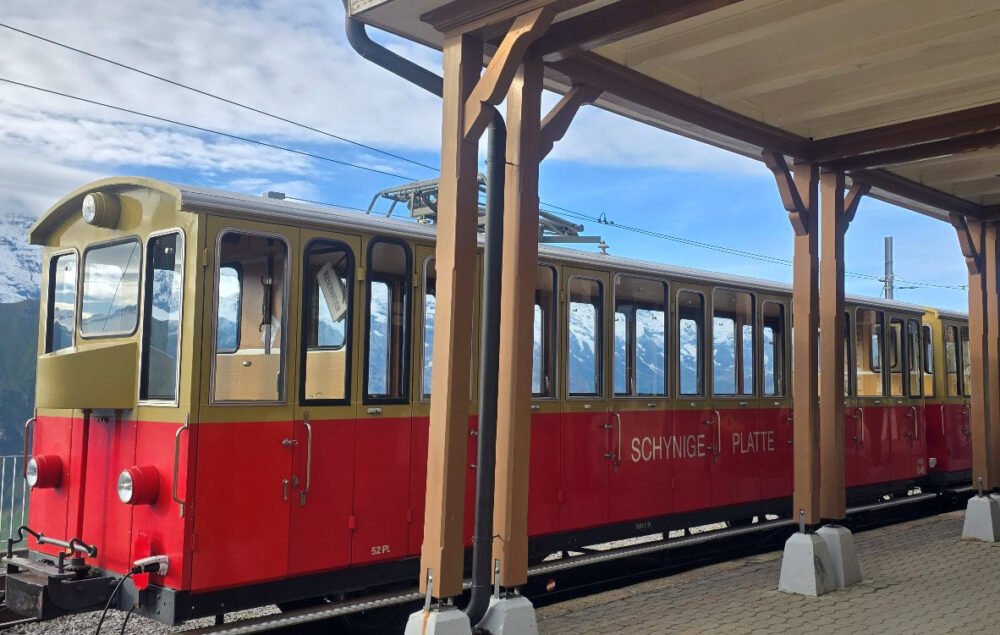
Switzerland Looks Easy. It Isn’t.
At first glance, Switzerland looks like one of the easiest countries in Europe to plan.
The trains are punctual. Public transport reaches almost every village. Scenic railways connect famous destinations like Zermatt, Lucerne, Interlaken, St. Moritz and Montreux. Everything appears organised, efficient and remarkably accessible.
It is exactly this confidence that causes many Switzerland itineraries to go wrong.
Switzerland is not difficult because the transport system is confusing.
It is difficult because everything is connected.
A mountain excursion affects your train connections. A hotel’s location affects how far you walk with your luggage. The weather influences whether today’s mountain trip should become tomorrow’s instead. Even the number of hotel changes determines whether you finish each day excited for dinner or simply exhausted.
An itinerary can look perfect on paper yet feel surprisingly rushed once you’re actually travelling.
This is where a good Switzerland Travel Planner becomes valuable.
Not because they know how to book hotels or reserve train seats.
But because they understand how all these seemingly small decisions come together to shape the entire holiday.
Years ago, I thought Switzerland was simply about choosing the right places.
The more I travelled through the country, the more I realised the destinations were only part of the experience.
How you move between them often matters just as much.
A beautiful train journey can become tiring if it follows an early morning mountain excursion. A spectacular viewpoint can become disappointing if low cloud rolls in and the itinerary doesn’t allow any flexibility. Even choosing where to stay within the same region can completely change how a holiday feels.
That is why I believe a well-designed Switzerland itinerary should never begin with a list of attractions.
It should begin with the traveller.
Customisation Is More Than Changing Hotels
Many itineraries are described as “customised” because the hotel category can be upgraded, the train class can be changed or one attraction can be swapped for another.
To me, that isn’t customisation.
That is simply adjustment.
Real travel design starts much earlier.
A honeymoon couple will travel differently from a family with young children. In my guide to planning a Switzerland honeymoon, I explore what this means in practice, from choosing quieter alpine bases to creating enough space for meaningful time together.
Retired travellers usually enjoy a different pace from a group of friends celebrating a birthday.
Some people love changing hotels because they enjoy seeing as much of the country as possible.
Others would rather unpack once, settle into a beautiful mountain village and explore it properly.
These differences completely change how I design an itinerary.
For example, many first-time visitors naturally want to include Zermatt, Lucerne, Jungfrau, St. Moritz and Montreux in a single holiday.
Every destination deserves its reputation.
However, once you begin calculating train journeys, mountain excursions, hotel check-ins, luggage movement and recovery time, the itinerary often becomes far busier than people initially imagine.
Sometimes the best advice I can give is surprisingly simple.
Stay longer.
Move less.
Enjoy more.
I’ve often recommended four nights in one mountain village instead of changing hotels every other day.
Choosing Wengen over Lauterbrunnen.
Or Pontresina instead of St. Moritz.
Not because one destination is objectively better than another.
But because it creates a journey that better matches the traveller sitting in front of me.
Good travel design isn’t about adding as many famous places as possible.
Quite often, it’s about recognising what can be left out without losing what makes Switzerland special.
In my experience, travellers rarely remember how many train journeys they managed to fit into a holiday.
They remember waking up to mountain views, enjoying an unhurried breakfast, taking a quiet walk through an alpine village, or sitting by a lake watching the world slow down.
Those are the moments I try to protect when I design a journey.
Why I Wanted to Understand Switzerland Properly
My fascination with Switzerland began with its transport system.
The more I travelled through the country, the more I realised how extraordinary it was.
A mainline train would connect with a mountain railway.
The mountain railway would connect with a cable car.
A boat would arrive in time for the next train.
Buses, boats, trains, funiculars and cable cars did not feel like separate forms of transport. They felt like parts of one complete system.
As someone who enjoys understanding how places connect and solving complex routing problems, I found Switzerland endlessly fascinating.
I remember thinking:
This is brilliant.
That curiosity made me want to experience the system properly.
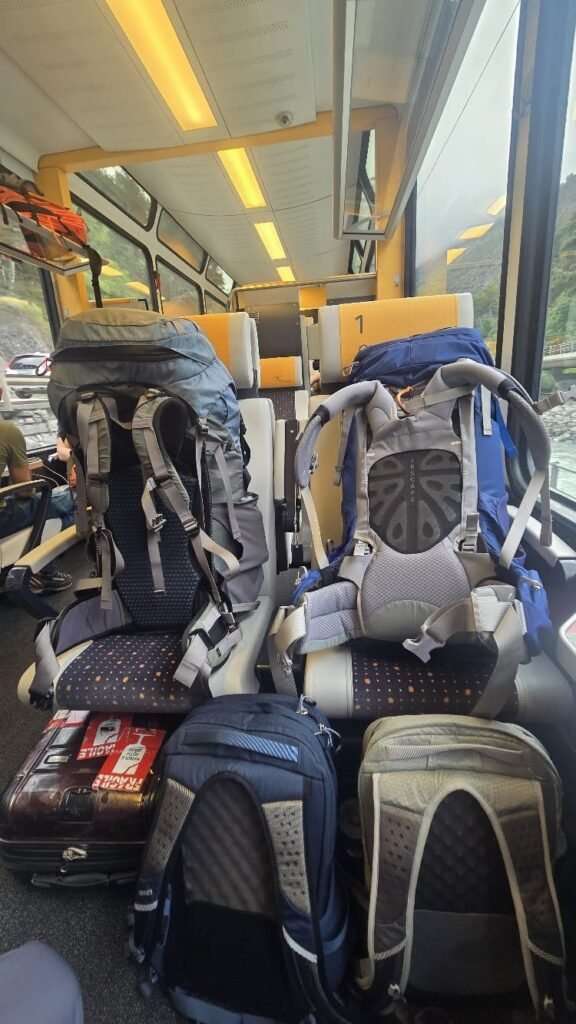
I spent close to a month travelling across Switzerland with a backpack and a cabin bag, much like many of my clients would.
I did not want to experience the country only as a visitor moving from one famous attraction to another. I wanted to understand how travelling through Switzerland actually felt.
I travelled on panoramic railways, stayed in different regions, used luggage forwarding services, walked between stations and experienced how mountain villages connected with the wider transport network.
I also wanted to answer practical questions that timetables and brochures rarely explain.
One question stayed in my mind.
Switzerland’s train schedules often showed connections of only three or four minutes.
The connections were considered valid, but I wondered whether an ordinary traveller carrying luggage could realistically make them.
So I decided to test one.
Travelling with my backpack and cabin bag, I deliberately took a three-minute connection.
It worked.
The station was designed efficiently, and once I understood where I needed to be before the train arrived, the transfer felt far less intimidating than it appeared on paper.
However, the experience also reminded me that the same connection would not suit every traveller.
A couple travelling light may manage it comfortably.
A family with young children, elderly parents or several large suitcases may appreciate a longer and more relaxed transfer.
The timetable tells you what is possible.
Experience tells you what is sensible.
The trip left me with even more questions than answers.
Instead of feeling that I had already seen and understood Switzerland, I wanted to learn more about why the system worked so well and how that knowledge could help me design better journeys.
That curiosity led me to complete the Certified Switzerland Travel Expert programme, followed by the Swiss Travel System Excellence Expert certification.
The training gave greater structure to what I had experienced on the ground. It deepened my understanding of Switzerland’s regions, tourism infrastructure and transport network.
The journey gave me practical experience.
The certifications helped me understand the system more fully.
Together, they changed the way I design Switzerland itineraries today.
Where Experience Changes the Advice
One lesson became very clear during my time in Switzerland.
The most popular choice is not always the best choice.
Take Switzerland’s two most famous scenic trains, the Glacier Express and the Bernina Express.
The Glacier Express is one of the world’s most famous scenic train journeys, and understandably appears on many first-time itineraries.
For some travellers, spending almost eight hours watching the Swiss Alps unfold outside the window is exactly how they want to experience Switzerland.
For others, however, the railway is only one part of a much larger holiday.
Spending an entire day on one train may mean giving up time exploring an alpine village, taking a gentle hike or simply slowing down to enjoy where they are.
The question isn’t whether the Glacier Express is worth it.
The question is whether it fits the journey.
The Bernina Express taught me something similar.
Many travellers assume they should reserve seats on the Bernina Express in both directions.
Personally, I often recommend travelling on the Bernina Express one way and returning on the regional trains.
Both trains travel along the same UNESCO World Heritage railway line.
Although the regional trains do not have the Bernina Express’s famous curved panoramic roof windows, they still have large panoramic windows, and the scenery is virtually identical.
There is another advantage.
The regional trains allow you to hop off at one of the small villages along the route before continuing your journey, something that is far less practical on the Bernina Express.
For travellers holding a Swiss Travel Pass, the regional train is already included.
The result is almost the same spectacular scenery, greater flexibility and one less reservation fee.
Good travel design isn’t about spending more or spending less.
It’s about spending where it makes the biggest difference to the journey.
This is one of the qualities I believe separates a knowledgeable Switzerland Travel Planner from someone who simply follows the most popular itinerary.
The same philosophy applies when choosing rail passes.
Many travellers assume the Swiss Travel Pass is automatically the best option.
Sometimes it is.
Sometimes a Swiss Half Fare Card or a regional pass offers better value.
The same judgement applies when choosing between first and second class.
First class can be worthwhile on longer journeys, especially when travellers value more space, a quieter carriage and easier luggage storage.
On some lake cruises, first-class tickets also provide access to the upper deck, which can offer better views and a more pleasant experience.
But first class is not automatically necessary for every journey.
On short regional trains, the difference may be small. A traveller may spend considerably more without gaining much beyond a quieter carriage.
I prefer to look at the journey as a whole.
Which train sectors are long enough for the added comfort to matter?
Will the traveller be carrying several suitcases?
Is the route likely to be crowded?
Does first class provide a meaningful advantage on that particular train or cruise?
Sometimes the answer is yes.
Sometimes second class is perfectly comfortable, and the money is better spent on a beautiful hotel room, a private transfer or an experience that adds more to the holiday.
Luxury isn’t about automatically choosing first class.
Luxury is understanding when first class genuinely enhances the journey, and when second class is already more than enough.
The same principle guides every Switzerland itinerary I design.
Spend where it genuinely improves the experience. Save where it doesn’t.
I don’t begin by choosing the rail pass.
I begin by designing the journey.
Only then do I work out which ticket makes the most sense.
Three Experiences That Changed The Way I Plan Switzerland
Not every lesson came from travelling on trains.
Some came from watching how other travellers experienced Switzerland.
One experience involved friends who visited Jungfraujoch as part of a fixed group tour.
Unfortunately, the mountain was completely covered by cloud that day.
Because the itinerary had been fixed months earlier, there was no opportunity to return on another day when the weather improved.
Nobody can control the weather.
However, a customised itinerary often gives enough flexibility to move an important mountain excursion whenever conditions are more favourable.
Sometimes that one decision becomes the difference between disappointment and one of the highlights of the holiday.
When choosing a Switzerland Travel Planner, ask how they deal with changing mountain weather. The answer will tell you a great deal about how they design journeys.
Another lesson came from a group of 11 travellers who were hoping to experience the Bernina Express.
When they searched online, every seat appeared to be sold out.
For most people, that would have been the end of the journey.
They contacted me to see if there was anything that could be done.
I checked availability through the reservation channels available to me as a travel professional and was able to secure seats for the entire group.
Their Bernina Express journey went ahead as planned.
That experience reminded me that planning a Switzerland holiday isn’t simply about making reservations.
It’s about understanding the destination well enough to know where alternatives exist and recognising that what appears impossible at first isn’t always the final answer.
The experience that stayed with me most, however, wasn’t a transport lesson at all.
It was a quiet hike near Zermatt.
As I walked further away from the popular viewpoints, the crowds gradually disappeared.
Then the Matterhorn revealed itself.
Traditional wooden chalets.
Alpine meadows.
Complete silence.
Almost nobody else around.
It reminded me that some of Switzerland’s most memorable moments aren’t always found where everyone else is standing.
Sometimes they’re found by walking a little further.
That hike changed something in me.
Since then, I’ve become less interested in helping clients simply see Switzerland.
I’m far more interested in helping them experience it.
It reminded me that Switzerland rewards curiosity. Sometimes the most memorable places aren’t marked on a map or listed in a guidebook. They’re discovered because you took the time to wander a little further.
So, How Do You Choose the Right Switzerland Travel Planner?
After spending time travelling across Switzerland, completing professional certifications and designing journeys for clients, I’ve come to believe there are a few qualities that truly matter.
A good Switzerland Travel Planner should understand far more than hotels and train timetables.
They should understand how the country actually works.
They should know when it is worth spending a little more for greater comfort, and when it isn’t.
They should recognise that two travellers visiting exactly the same destinations may need completely different itineraries because they travel differently.
Most importantly, they should be willing to tell you when something isn’t the best choice, even if it means recommending fewer destinations, a different route or a slower pace.
To me, that is what travel design is about.
It isn’t about creating the busiest itinerary.
It isn’t about ticking off the greatest number of famous attractions.
It is about understanding how you want to experience Switzerland, then designing a journey around that.
Every itinerary I create begins with one simple question.
Explore my complete Switzerland Travel Planner guide for a broader look at how routing, pacing, hotel bases, scenic trains and weather flexibility come together.
How should this holiday feel?
The answer shapes every decision that follows.
Sometimes that means spending four nights in one mountain village instead of changing hotels every other day.
Sometimes it means taking the Bernina Express one way and returning on the regional train.
Sometimes it means keeping a free day so a mountain excursion can be moved if the weather changes.
Sometimes it means suggesting a quiet alpine walk instead of another famous attraction.
There is rarely one perfect itinerary.
Switzerland taught me that the best journeys aren’t measured by how much you see.
These experiences eventually shaped my approach to designing journeys for slower, more meaningful travel, which I explore further in How to Plan a Switzerland Private Tour for Mature Travellers.
If this article has helped you think about Switzerland a little differently, then it has achieved exactly what I hoped.
And if you’re looking for someone who enjoys designing journeys as much as travelling them, I’d love to start with a conversation.
Looking for a Switzerland Travel Planner?
I personally design bespoke Switzerland journeys for travellers who value thoughtful pacing, seamless logistics and experiences shaped around the way they want to travel.
Explore my luxury Switzerland private tours from Singapore to understand how we can work together.
About the Author
Best Teo is the Chief Travel Designer of Epic Travel Designer, a Singapore-based boutique travel company specialising in customised private journeys.
She is a Certified Switzerland Travel Expert and Swiss Travel System Excellence Expert, with firsthand experience travelling across Switzerland by rail, scenic trains, lake cruises and mountain transport.
Best designs customised Switzerland itineraries for couples, families and multi-generational travellers, with careful attention to routing, pacing, weather flexibility, hotel bases and travel logistics.
4 thoughts on “How to Choose the Right Switzerland Travel Planner”
Comments are closed.