
Introduction
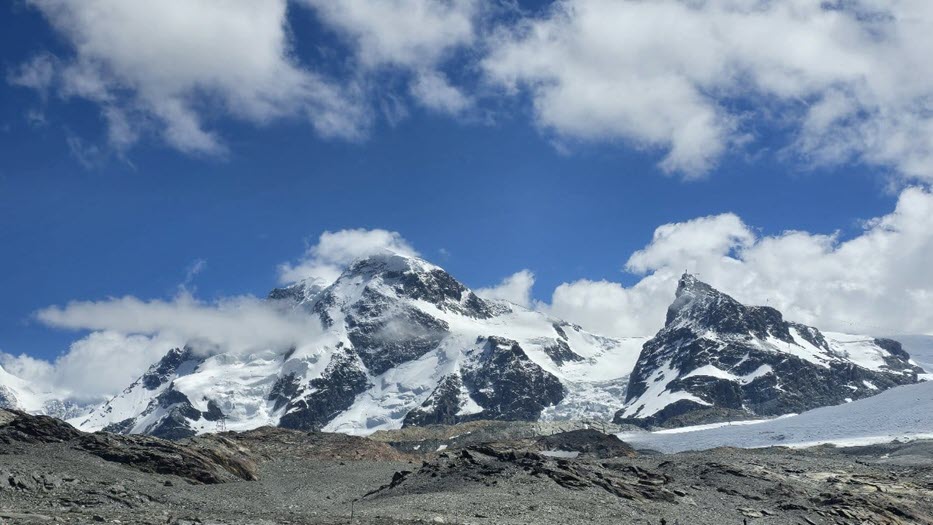
I first visited Switzerland in 2000, as part of a graduation trip that covered more than ten countries across Europe. Switzerland was given only two days.
On paper, we had “covered” Bern, Lucerne, Interlaken and Jungfraujoch. In real travel terms, we had barely begun. Still, something stayed with me.
I remember waking up early in a simple bed and breakfast in Interlaken, walking out at around 5am into the valley, with mountains rising quietly around us. Cows were grazing, bells ringing softly in the distance. It was not an attraction. It was just a morning, but I can still recall it after more than two decades.
That same trip gave me my first encounter with snow at Jungfraujoch. I behaved like a child, threw snowballs with my friends, and made a very poor-looking snowman. It was joyful, but also too brief.
I left Switzerland feeling I had rushed through a country that deserved more time. I made a quiet promise to return properly one day.
Trying to cover too much is still one of the most common Switzerland trip-planning mistakes made by first-time travellers.
It took 26 years.
When I finally returned, I stayed close to a month and explored Switzerland through its public transport system. After that trip, I became a Certified Switzerland Travel Expert and completed the Swiss Travel System Excellence Expert certification as well.
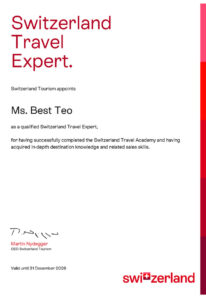
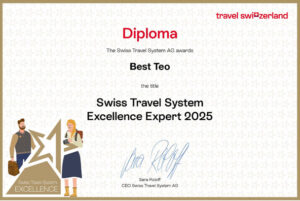
Not because I wanted another title.
After that trip, I had already started designing customised journeys and tested out my ideas to see what truly worked. I have never been comfortable recommending something I have not personally experienced or properly understood.
If I recommend a scenic train, I want to know what changing platforms with luggage actually feels like. If I suggest a mountain excursion, I want to understand how weather changes the experience. If I place a hotel in an itinerary, I want to know whether it supports the flow of the journey, not just whether it looks beautiful in photographs.
Certification was not about collecting another badge. It was about deepening the judgement behind every Switzerland journey I design. That judgement is also what travellers should consider when choosing the right Switzerland travel planner.
The Promise I Made As A Young Traveller
That first Switzerland visit taught me something I only understood much later as a travel designer.
A destination can be beautiful, but if the pacing is wrong, the traveller leaves with fragments instead of a proper experience. We saw famous places, but we did not have enough time to settle into them. There was no room to understand the geography, the distances, the rhythm of the valleys, or how weather could change the value of a mountain excursion.
Many Singapore travellers still travel to Europe this way, especially on their first big trip. They want to make the airfare worthwhile, so they include too many countries, too many hotel changes, and too many early departures. It is understandable. Annual leave is limited. Long-haul flights are expensive. Everyone wants value.
Switzerland quietly exposes the weakness of that approach.
Two nights in Interlaken may allow a visit to Jungfraujoch if the weather behaves. It does not allow much flexibility if the mountain is covered in cloud. A quick stop in Lucerne may look sufficient, until you realise the lake, nearby mountains, old town, and boat connections could easily support a slower stay.
When I became a Switzerland travel planner for my clients, I often thought back to that younger version of myself. I did not want my clients to leave Switzerland thinking, “I wish we had stayed longer,” or worse, “I wish we had planned this differently.”
Why Certification Was Not Just A Formality
Switzerland looks simple on a map. Compared with its neighbours, it is small. That can mislead travellers into thinking it is easy to design.
The challenge is not distance alone. It is altitude, terrain, train changes, mountain operating times, luggage movement, weather exposure, and the way one region connects to another. A journey from Zermatt to the Engadin is not just a line across the Alps. It is a full day of movement, and depending on how it is done, it can feel either elegant or exhausting.
During my certification studies, I realised how much depth sits beneath the familiar names. Most travellers know Interlaken, Grindelwald, Zermatt, Jungfraujoch and Lucerne. They are important places, but they are not the whole country.
There are quieter valleys, lake regions, postbus routes, scenic rail sections, and smaller towns that work beautifully when placed correctly inside a Switzerland itinerary. Some are not suitable for every traveller. Some require more patience. Some are best used as transitions rather than bases.
The Swiss Travel System Excellence Expert programme helped me understand the transport network as one connected design tool, not a collection of individual tickets. Trains, lake cruises, cogwheel railways, cable cars, buses and luggage services all affect how a journey feels.
As a Switzerland travel designer, that matters. The wrong route can waste half a day. The right one can turn a transfer into one of the best parts of the trip.
Seeing Switzerland As A System
Before I became a travel designer, I worked in IT.
Perhaps that explains why I naturally see Switzerland as a connected system rather than a list of attractions. In software design, one decision affects the next. A beautiful interface means little if the flow behind it is clumsy.
Travel works the same way.
Hotels, trains, mountain railways, lake cruises, luggage transfers, weather windows and sightseeing are not isolated decisions. They affect one another.
Changing one hotel base may improve the entire route. Taking one scenic train instead of another may reduce unnecessary backtracking. Scheduling Jungfraujoch one day later could turn a cloudy disappointment into the highlight of the holiday.
Most travellers never notice these decisions.
And that is exactly the point.
Good travel design feels effortless because the thinking has already been done before the client leaves Singapore.
What Switzerland Taught Me About Travel Flow
I have always had a strong affinity with train travel. I like countries where trains allow travellers to move with independence and precision. Japan and Taiwan are good examples. Switzerland is another, but with a very different personality.
In Switzerland, the train is not simply transport between attractions. It is part of the itinerary’s structure. A well-placed rail journey gives travellers a natural pause between active days. It lets them rest without feeling that time has been wasted.
This is especially important in regions like Zermatt, the Engadin and Lucerne.
Zermatt sits deep in the mountains, and getting there takes commitment. It rewards travellers who stay long enough to allow for weather flexibility. The Engadin, around Pontresina and St. Moritz, has a more spacious alpine character, with high valleys and beautiful rail approaches. Lucerne works differently again. It is lower, gentler, and excellent for lake cruises, nearby mountain excursions, and a softer end or beginning to a trip.
Combining these regions can be wonderful, but the order matters. If a traveller goes Zurich, Zermatt, Lucerne, St. Moritz, then back west again, the map may look acceptable, but the experience becomes inefficient. There is too much crossing and recrossing of the country.
A more thoughtful route respects geography. It may use Zurich as an arrival point, move east into the Engadin, cross the Alps by scenic rail, continue towards Zermatt, then finish through central Switzerland or Geneva, depending on the flight plan. The scenic trains are not inserted as trophies. They support the direction of travel.
How Certification Changed The Way I Design For Clients
The biggest benefit for clients is not that I know more facts about Switzerland. It is that I can make better judgement calls.
For example, I am careful with hotel changes. Switzerland’s trains are efficient, but packing and unpacking repeatedly still drains energy. A well-chosen base can reduce travel fatigue. Lucerne, Interlaken, Zermatt, Montreux, Pontresina or Zurich can each work well, but only when matched to the traveller’s priorities and the onward route.
Luggage is another practical detail that affects comfort. There are journeys where travelling with bags is perfectly manageable. There are others where luggage forwarding makes a significant difference, especially when clients are taking panoramic trains, changing platforms, or combining rail with mountain transport. Not every trip needs it, but knowing when to use it can save both time and stress.
Weather planning is just as important. I would rarely lock a Jungfraujoch or Gornergrat visit too early without considering forecast flexibility. For many mountain excursions, the best decision is made closer to the date, sometimes just two or three days before. A rigid itinerary may look organised, but it can send travellers up an expensive mountain into complete cloud.
Then there are comfort upgrades that are worth considering selectively. On certain lake cruises, first class can genuinely improve the experience because the upper deck is quieter and more spacious. On some train sectors, first class is less essential. Good planning is not about upgrading everything. It is about knowing where the upgrade changes the day.
For Switzerland travel from Singapore, where travellers often invest significantly in long-haul flights and limited holiday time, these small decisions carry weight.
Conclusion
Becoming a Certified Switzerland Travel Expert was a natural step after returning to a country that had stayed in my memory for 26 years.
The more I learnt, the more I realised how much there still is to explore. Switzerland is not only about the famous mountain names. It is a country of routes, valleys, lakes, weather windows, and carefully timed connections. It rewards travellers who give it space.
I am already planning future trips to lesser-used regions, not simply to find new places for the sake of novelty, but to test routes properly before recommending them. This also helps reduce pressure on the most crowded areas, while giving clients a better-balanced journey.
When I design Switzerland today, I still think about that early morning in Interlaken. The air, the mountains, the sound of cow bells, and the feeling that I had left too soon.
Perhaps that is why pacing matters so much to me. I do not want my clients to rush through Switzerland. I want them to feel they had enough time to understand why the country stays with people long after they return home.
Planning a Trip to Switzerland?
If you’re planning a Switzerland holiday and want more than a standard itinerary, I’d be happy to help.
As a Certified Switzerland Travel Expert and Swiss Travel System Excellence Expert, I design customised Switzerland journeys around how you travel—not just where you want to go.
Every itinerary is built from scratch, with careful attention to routing, pacing, scenic rail journeys, weather flexibility, accommodation, and logistics, so your time in Switzerland feels effortless from start to finish.
Start planning your Switzerland journey here
About the Author
Best Teo is the Chief Travel Designer of Epic Travel Designer, a Singapore-based boutique travel company specialising in customised private journeys.
She is a Certified Switzerland Travel Expert and Swiss Travel System Excellence Expert, with firsthand experience travelling across Switzerland by rail, scenic trains, lake cruises and mountain transport.
Best designs customised Switzerland itineraries for couples, families and multi-generational travellers, with careful attention to routing, pacing, weather flexibility, hotel bases and travel logistics.
Why I Became A Certified Switzerland Travel Expert
Introduction
I first visited Switzerland in 2000, as part of a graduation trip that covered more than ten countries across Europe. Switzerland was given only two days.
On paper, we had “covered” Bern, Lucerne, Interlaken and Jungfraujoch. In real travel terms, we had barely begun. Still, something stayed with me.
I remember waking up early in a simple bed and breakfast in Interlaken, walking out at around 5am into the valley, with mountains rising quietly around us. Cows were grazing, bells ringing softly in the distance. It was not an attraction. It was just a morning, but I can still recall it after more than two decades.
That same trip gave me my first encounter with snow at Jungfraujoch. I behaved like a child, threw snowballs with my friends, and made a very poor-looking snowman. It was joyful, but also too brief.
I left Switzerland feeling I had rushed through a country that deserved more time. I made a quiet promise to return properly one day.
It took 26 years.
When I finally returned, I stayed close to a month and explored Switzerland through its public transport system. After that trip, I became a Certified Switzerland Travel Expert and completed the Swiss Travel System Excellence Expert certification as well.
Not because I wanted another title.
After that trip, I had already started designing customised journeys and tested out my ideas to see what truly worked. I have never been comfortable recommending something I have not personally experienced or properly understood.
If I recommend a scenic train, I want to know what changing platforms with luggage actually feels like. If I suggest a mountain excursion, I want to understand how weather changes the experience. If I place a hotel in an itinerary, I want to know whether it supports the flow of the journey, not just whether it looks beautiful in photographs.
Certification was not about collecting another badge. It was about deepening the judgement behind every Switzerland journey I design.
The Promise I Made As A Young Traveller
That first Switzerland visit taught me something I only understood much later as a travel designer.
A destination can be beautiful, but if the pacing is wrong, the traveller leaves with fragments instead of a proper experience. We saw famous places, but we did not have enough time to settle into them. There was no room to understand the geography, the distances, the rhythm of the valleys, or how weather could change the value of a mountain excursion.
Many Singapore travellers still travel to Europe this way, especially on their first big trip. They want to make the airfare worthwhile, so they include too many countries, too many hotel changes, and too many early departures. It is understandable. Annual leave is limited. Long-haul flights are expensive. Everyone wants value.
Switzerland quietly exposes the weakness of that approach.
Two nights in Interlaken may allow a visit to Jungfraujoch if the weather behaves. It does not allow much flexibility if the mountain is covered in cloud. A quick stop in Lucerne may look sufficient, until you realise the lake, nearby mountains, old town, and boat connections could easily support a slower stay.
When I became a Switzerland travel planner for my clients, I often thought back to that younger version of myself. I did not want my clients to leave Switzerland thinking, “I wish we had stayed longer,” or worse, “I wish we had planned this differently.”
Why Certification Was Not Just A Formality
Switzerland looks simple on a map. Compared with its neighbours, it is small. That can mislead travellers into thinking it is easy to design.
The challenge is not distance alone. It is altitude, terrain, train changes, mountain operating times, luggage movement, weather exposure, and the way one region connects to another. A journey from Zermatt to the Engadin is not just a line across the Alps. It is a full day of movement, and depending on how it is done, it can feel either elegant or exhausting.
During my certification studies, I realised how much depth sits beneath the familiar names. Most travellers know Interlaken, Grindelwald, Zermatt, Jungfraujoch and Lucerne. They are important places, but they are not the whole country.
There are quieter valleys, lake regions, postbus routes, scenic rail sections, and smaller towns that work beautifully when placed correctly inside a Switzerland itinerary. Some are not suitable for every traveller. Some require more patience. Some are best used as transitions rather than bases.
The Swiss Travel System Excellence Expert programme helped me understand the transport network as one connected design tool, not a collection of individual tickets. Trains, lake cruises, cogwheel railways, cable cars, buses and luggage services all affect how a journey feels.
As a Switzerland travel designer, that matters. The wrong route can waste half a day. The right one can turn a transfer into one of the best parts of the trip.
Seeing Switzerland As A System
Before I became a travel designer, I worked in IT.
Perhaps that explains why I naturally see Switzerland as a connected system rather than a list of attractions. In software design, one decision affects the next. A beautiful interface means little if the flow behind it is clumsy.
Travel works the same way.
Hotels, trains, mountain railways, lake cruises, luggage transfers, weather windows and sightseeing are not isolated decisions. They affect one another.
Changing one hotel base may improve the entire route. Taking one scenic train instead of another may reduce unnecessary backtracking. Scheduling Jungfraujoch one day later could turn a cloudy disappointment into the highlight of the holiday.
Most travellers never notice these decisions.
And that is exactly the point.
Good travel design feels effortless because the thinking has already been done before the client leaves Singapore.
What Switzerland Taught Me About Travel Flow
I have always had a strong affinity with train travel. I like countries where trains allow travellers to move with independence and precision. Japan and Taiwan are good examples. Switzerland is another, but with a very different personality.
In Switzerland, the train is not simply transport between attractions. It is part of the itinerary’s structure. A well-placed rail journey gives travellers a natural pause between active days. It lets them rest without feeling that time has been wasted.
This is especially important in regions like Zermatt, the Engadin and Lucerne.
Zermatt sits deep in the mountains, and getting there takes commitment. It rewards travellers who stay long enough to allow for weather flexibility. The Engadin, around Pontresina and St. Moritz, has a more spacious alpine character, with high valleys and beautiful rail approaches. Lucerne works differently again. It is lower, gentler, and excellent for lake cruises, nearby mountain excursions, and a softer end or beginning to a trip.
Combining these regions can be wonderful, but the order matters. If a traveller goes Zurich, Zermatt, Lucerne, St. Moritz, then back west again, the map may look acceptable, but the experience becomes inefficient. There is too much crossing and recrossing of the country.
A more thoughtful route respects geography. It may use Zurich as an arrival point, move east into the Engadin, cross the Alps by scenic rail, continue towards Zermatt, then finish through central Switzerland or Geneva, depending on the flight plan. The scenic trains are not inserted as trophies. They support the direction of travel.
How Certification Changed The Way I Design For Clients
The biggest benefit for clients is not that I know more facts about Switzerland. It is that I can make better judgement calls.
For example, I am careful with hotel changes. Switzerland’s trains are efficient, but packing and unpacking repeatedly still drains energy. A well-chosen base can reduce travel fatigue. Lucerne, Interlaken, Zermatt, Montreux, Pontresina or Zurich can each work well, but only when matched to the traveller’s priorities and the onward route.
Luggage is another practical detail that affects comfort. There are journeys where travelling with bags is perfectly manageable. There are others where luggage forwarding makes a significant difference, especially when clients are taking panoramic trains, changing platforms, or combining rail with mountain transport. Not every trip needs it, but knowing when to use it can save both time and stress.
Weather planning is just as important. I would rarely lock a Jungfraujoch or Gornergrat visit too early without considering forecast flexibility. For many mountain excursions, the best decision is made closer to the date, sometimes just two or three days before. A rigid itinerary may look organised, but it can send travellers up an expensive mountain into complete cloud.
Then there are comfort upgrades that are worth considering selectively. On certain lake cruises, first class can genuinely improve the experience because the upper deck is quieter and more spacious. On some train sectors, first class is less essential. Good planning is not about upgrading everything. It is about knowing where the upgrade changes the day.
For Switzerland travel from Singapore, where travellers often invest significantly in long-haul flights and limited holiday time, these small decisions carry weight.
Conclusion
Becoming a Certified Switzerland Travel Expert was a natural step after returning to a country that had stayed in my memory for 26 years.
The more I learnt, the more I realised how much there still is to explore. Switzerland is not only about the famous mountain names. It is a country of routes, valleys, lakes, weather windows, and carefully timed connections. It rewards travellers who give it space.
I am already planning future trips to lesser-used regions, not simply to find new places for the sake of novelty, but to test routes properly before recommending them. This also helps reduce pressure on the most crowded areas, while giving clients a better-balanced journey.
When I design Switzerland today, I still think about that early morning in Interlaken. The air, the mountains, the sound of cow bells, and the feeling that I had left too soon.
Perhaps that is why pacing matters so much to me. I do not want my clients to rush through Switzerland. I want them to feel they had enough time to understand why the country stays with people long after they return home.
Planning a Trip to Switzerland?
If you’re planning a Switzerland holiday and want more than a standard itinerary, I’d be happy to help.
As a Certified Switzerland Travel Expert and Swiss Travel System Excellence Expert, I apply this knowledge to every luxury Switzerland private tour from Singapore I personally design, from choosing the right bases to coordinating scenic trains, luggage transfers and weather-dependent mountain experiences.
About the Author
Best Teo is the Chief Travel Designer of Epic Travel Designer, a Singapore-based boutique travel company specialising in customised private journeys.
She is a Certified Switzerland Travel Expert and Swiss Travel System Excellence Expert, with firsthand experience travelling across Switzerland by rail, scenic trains, lake cruises and mountain transport.
Best designs customised Switzerland itineraries for couples, families and multi-generational travellers, with careful attention to routing, pacing, weather flexibility, hotel bases and travel logistics.
One thought on “Why I Became A Certified Switzerland Travel Expert”
Comments are closed.